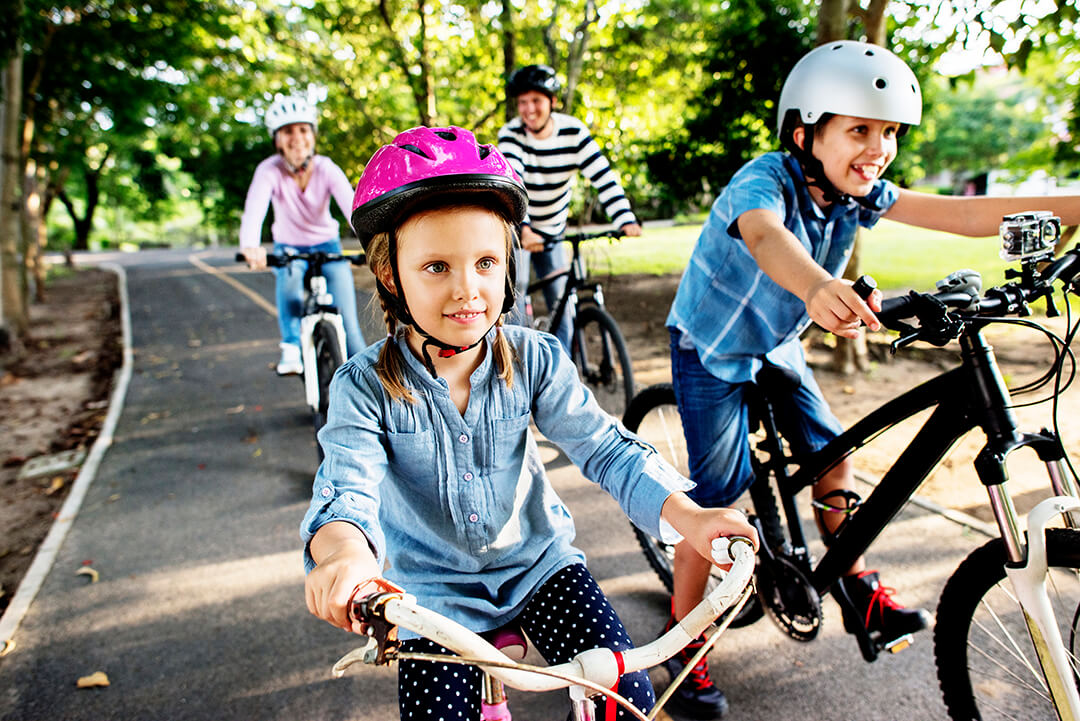
The dishes can wait. So can the laundry, the inbox, and the list that never really ends. But your toddler’s question about why the moon follows the car — that one has a shelf life. Slowing down is how you catch it before it’s gone.
Most of us spend our days a half-step ahead of ourselves. We rush the morning so we can rush the commute, so we can rush the bedtime. And somewhere in all that motion, the small stuff slips past us. The good stuff. So here is a gentle case for doing the opposite, just a little, starting today.
Slowing down isn’t doing less
It’s a common worry. If we ease off the pace, won’t everything quietly fall behind? But slowing down isn’t really about achieving less. Instead, it’s about being more present for the things you’re already doing anyway.
A slow breakfast is still breakfast. A slow walk still gets you there. The only difference is that you actually arrive — not just your body, but your attention too. And children feel that difference instantly. They always seem to know when you’re truly with them, and when you’re somewhere else entirely.
Why we started rushing in the first place
Nobody chooses to hurry their children. It happens slowly, almost politely. A full calendar feels responsible. A busy weekend feels productive. And before long, speed quietly becomes the default setting for an entire family.
But fast and good are not the same thing. We often rush toward a finish line that simply moves again the moment we reach it. So the to-do list never empties, no matter how quickly we work through it. Slowing down is how you finally step off that particular treadmill, even if only for one afternoon.
Children already live at a slower speed
Watch a two-year-old meet a snail. They stop. They crouch. They narrate the whole encounter in a language that’s only half-formed. There is no agenda here, and no clock. Just wonder.
We were all like that once. Then, somewhere along the way, we quietly learned to hurry. When we slow down to a child’s pace, even for ten minutes, we borrow a little of that wonder back. Puddles become oceans. A cardboard box becomes a spaceship. The ordinary turns extraordinary — because someone finally stopped long enough to look.
What slowing down actually looks like
It doesn’t require a cabin in the woods or a screen-free month. Instead, it lives quietly in the small choices you make all day long.
Leaving a little earlier
Give the walk to school a bit of room to breathe, so it becomes a walk and not a sprint. Those extra ten minutes are usually where the real conversations live, somewhere between the front door and the school gate.
Eating without the screens
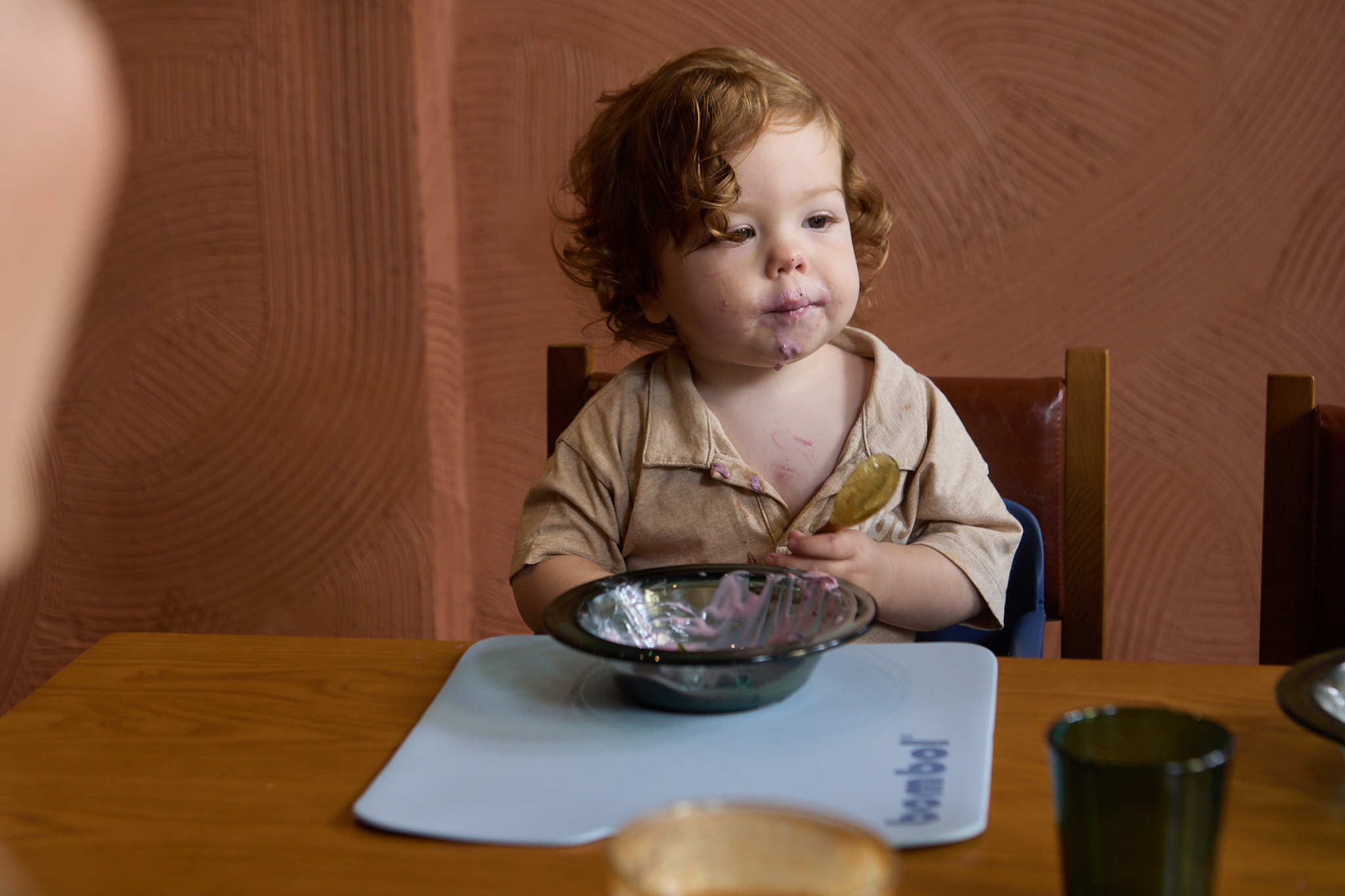
Pick one meal a day and share it fully. No phones face-up, no show humming in the background — just the people at the table. If you want a place to start, our guide to more meaningful family mealtimes is full of gentle, doable ideas.
Saying yes to the detour
When your child wants to balance along a low wall or count every drain cover on the street, try to let them. The errand will survive. That particular small moment, however, might not ever come around again.
Doing nothing on purpose
A lazy Sunday with no plan is not a wasted Sunday. Rather, it’s the soft, empty space where boredom slowly turns itself into imagination, and where children learn to be good company for themselves.
The gift is really for you too
We often talk about slowing down as something we generously give our children. And we do. But the quieter truth is that it’s also a gift we give to ourselves, in the very same breath.
Parenting moves fast. The days are long and the years are short, as the saying goes — and yet mostly the years are short too. Slowing down is how you stop trading the present for a future that keeps shifting the goalposts. More than that, it’s how you’ll actually remember an ordinary Tuesday, years from now.
The pace your children will remember
Years from now, your children probably won’t recall the spotless kitchen or the perfectly organised weekend. What tends to stay with them is the feeling of a home that had time in it. The unhurried bedtime story. The morning that wasn’t a race against the door.
That feeling is built from ordinary, repeated moments, and not from grand gestures. So every time you choose to slow down, even briefly, you hand your child a small memory of being unhurried, wanted, and worth lingering over. Honestly, few things you do will ever matter more than that.
Start small, start today
You really don’t have to overhaul your whole life. You just have to loosen your grip on the clock, here and there. Notice one more thing. Linger one more minute. Let one bath run a little long, even on the evenings when you’re tired.
Because the moments you’ll miss most won’t be the ones you rushed through. They’ll be the quiet ones you were brave enough to slow down for.
It starts early. A Sunday, usually — and on Father’s Day, that quiet feels different. The house is still, and then, suddenly, it isn’t. A door creaks. Small feet move down the hallway. There’s whispering, the loud kind that children believe is quiet. A folded piece of paper appears at the edge of the bed. Your name is on it, spelled almost right.
This is the real Father’s Day. Not the version printed on the cards in shops, but the one that arrives in pyjamas, with sticky hands and a plan it can barely contain.
We spend a lot of energy wondering what to buy for the dads in our lives. Yet the day, at its heart, runs the other way. It is also about what children long to give. And what they want to give is almost never the thing that ends up gift-wrapped.
The gift is rarely the gift
Ask a small child what they’re giving Dad, and the answer is wonderfully literal. Maybe a rock. Maybe a drawing of a dinosaur. Perhaps a single flower, pulled from the garden with its roots still attached.
But watch their face as they hand it over. The rock isn’t really a rock. It means, “I found this and thought of you.” The drawing isn’t about the dinosaur. Instead, it means, “I made this with my own hands, for you and no one else.”
Children give what they have. And what they have is attention, effort, and an enormous, uncomplicated love. The object is simply the wrapping. So the trick, every year, is to look past the gift and read the message underneath.
What children really want to give on Father’s Day
If you slow down enough to notice, a pattern appears. Beneath the crumpled paper and the breakfast-in-bed disasters, kids are quietly trying to offer a few specific things. None of them cost a penny. Yet all of them are worth more than anything on a wishlist.
Their full attention
Children are generous with their presence in a way adults rarely manage. On Father’s Day, a child wants Dad all to themselves. Not multitasking. Not half-listening. Just there. The greatest thing they can give, it turns out, is the very thing they’re quietly asking for in return.
Something they made
A shop-bought gift means little to a four-year-old. A handprint, a wobbly clay bowl, or a song invented on the spot — that is the real currency. Making something takes time and thought. And for a child, that effort is the love itself. They want Dad to feel it in his hands.
A morning that belongs to him
Kids notice routines. They know Dad usually rushes, fixes, tidies, and works. So they offer the opposite. A slow morning. A walk with no real destination. A chance to do nothing at all, together. It’s their way of saying: today, you don’t have to be useful. You just have to be here.
The truth, unfiltered
Children are honest to a fault. “You’re the best at piggybacks.” “Your beard is scratchy.” “I love you more than ice cream.” These small declarations are gifts too — unrehearsed, unguarded, and completely true. So hold on to them. They don’t stay in that pure form forever.
What dads quietly treasure on Father’s Day
Here is the quiet truth most fathers will admit, if you ask them years later. They rarely remember the things they were given. But they remember the moments.
The early walk. A shared joke. The weight of a sleeping child against their chest. That lopsided drawing which lived on the fridge for three years until it faded. The gifts that last aren’t bought at all. Instead, they’re built slowly, out of ordinary time spent together.
So if you’re a partner wondering how to make the day special, the answer is often simpler than a shopping list. Give him the morning. Hand over the kids, unhurried. And give him permission to do absolutely nothing at all.
Making room for the real Father’s Day
None of this requires a plan. In fact, the best Father’s Days tend to resist planning altogether. Though the celebration itself is more than a century old — Father’s Day has been marked since the early 1900s — its meaning still gets written fresh in each family, every single year.
So let the children lead for once. Let breakfast be a little chaotic. Let the drawing be lopsided and the song be off-key. The mess is part of the message. And the message, year after year, stays the same: we made this for you, because you’re ours.
One day, these mornings will be memories. The folded paper will be tucked away in a drawer. The small feet in the hallway will have grown. But the feeling — that quiet, sticky, overwhelming love — is the thing children most want to give.
This Father’s Day, simply let them. And let it be more than enough.
Cozy Winter Days: 10 Indoor Activities to Enjoy with Your Kids
When the temperatures drop and daylight fades faster, staying inside can become an invitation — not a limitation. Winter is the perfect season to slow down, reconnect, and create memories that don’t need snow or sunshine. Whether you’re building forts, baking cookies, or inventing worlds together, here are 10 cozy, creative indoor activities to make staying in feel like the best place to be.
1) Build a Blanket Fort Together
Gather chairs, sheets, and fairy lights to build your secret hideaway. Once inside, time slows — it’s the perfect spot for storytime or snacks.
2) Have an Indoor Picnic
Spread a blanket in the living room, prepare finger foods, and enjoy a meal that feels special simply because it’s unexpected. Kids love the novelty of breaking the routine — even indoors.
3) Play Chef for a Day
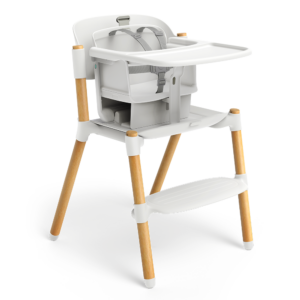
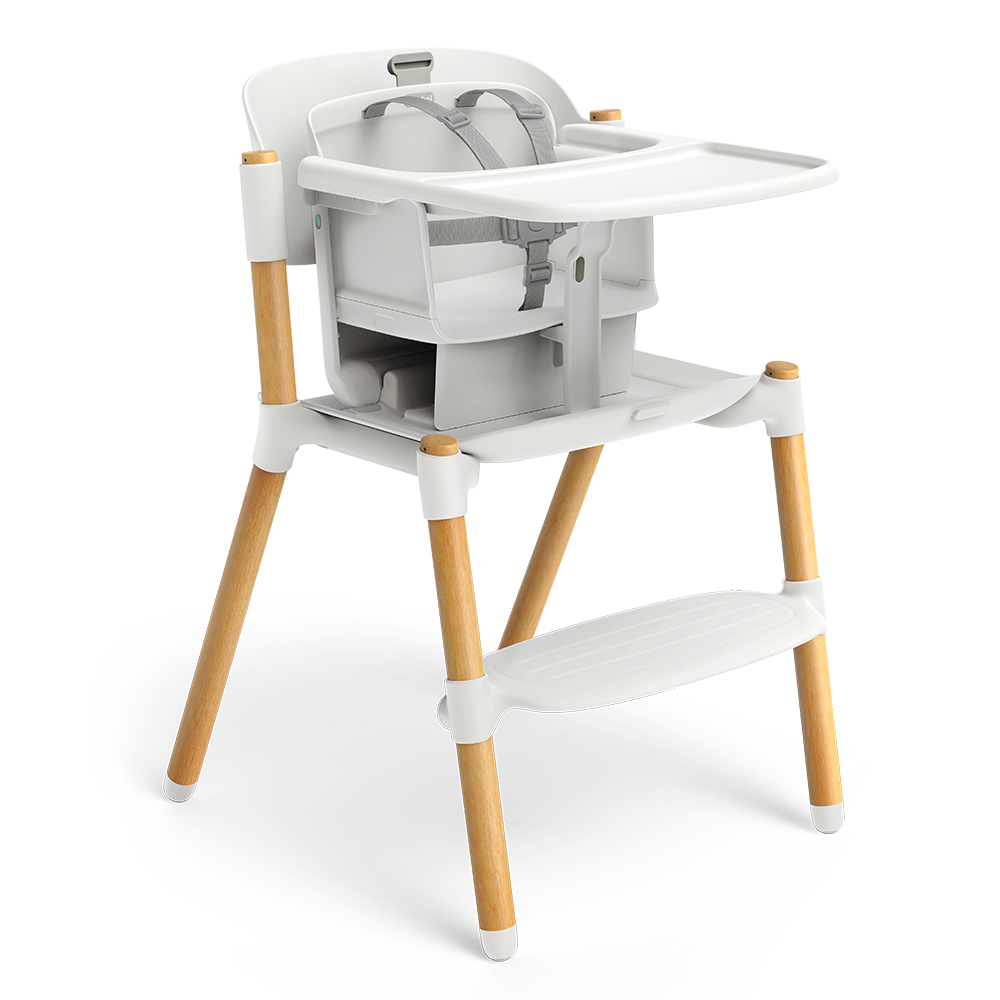
From mixing cookie dough to decorating cupcakes, cooking together is magical. Set your child safely at the table so they can whisk, stir, and taste alongside you. A compact booster like The Ru™ Booster helps little ones join comfortably at table height — no wobbling on chairs.
4) Create a “Mini Museum” of Family Art
Give everyone paper, markers, or recycled materials and start creating. When you’re done, display each masterpiece and host a guided tour of your family gallery.
5) Indoor Treasure Hunt
Hide a few objects around the house and draw a map or write clues. Adjust difficulty by age; add riddles for extra fun. No screens required.
6) Storytime Theater
Pick a favorite book and turn it into a mini play. Assign roles, make costumes from old clothes, and perform. You’ll be amazed how much imagination a single living room can hold.
7) DIY Science Lab
Try simple experiments with common ingredients: a baking-soda volcano, cornstarch “oobleck,” or floating/sinking tests. Learning through play keeps minds curious on cold days.
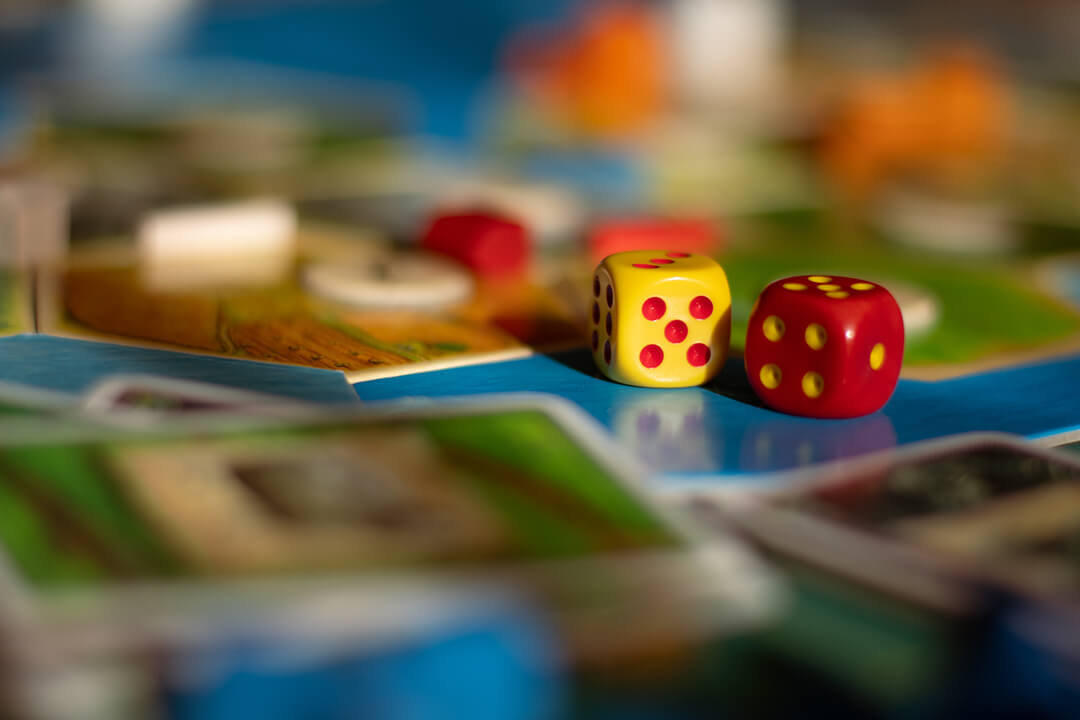
8) Family Board Game Marathon
Rotate classics and quick card games. Games are not just about winning — they’re about laughing, learning, and sometimes negotiating. Perfect for long winter afternoons.
9) Memory Movie Night
Instead of a random film, create a family memory night: watch home videos or browse old photos. Let kids pick moments to talk about — stories grow when shared.
10) Dream Together
Talk about what you all want to do when spring arrives — places to visit, things to try. Write a family wish list and put it somewhere visible. Warmth isn’t only temperature; it’s connection.
Embrace the Slow Season
Winter invites us to pause and be present. These small, cozy rituals aren’t just about keeping busy; they’re about building bonds that last. Turn down the noise, stay in your warm cocoon, and enjoy the beauty of simple togetherness — because sometimes, the best adventures happen right at home.
10 Simple Ways to Make Family Mealtimes More Meaningful
Meals aren’t just about food — they’re about connection. With a few mindful tweaks, you can turn ordinary dinners into moments your kids look forward to. Here are 10 easy ideas to bring more calm, conversation, and joy to the table.
1) Make Mealtime Screen-Free
Phones off, TV off, attention on. Kids copy what they see — presence begins with example. A quiet table helps everyone slow down and connect.
2) Let Kids Help Set the Table
Give small, age-appropriate tasks: napkins, spoons, folded cloths. Little responsibilities build pride and make kids feel included from the start.
3) Create a Simple Ritual
Begin with a toast, a gratitude round, or a “question of the day.” Rituals anchor the moment and signal that mealtime is special.
4) Involve Kids in Cooking
Invite your child to stir, mix, or taste. Seated comfortably and safely at the right height with The Ru™ Booster, they can join the action at eye level — no wobbling on chairs.
5) Keep Meals Simple, Not Perfect
Real life beats perfect plates. Choose easy recipes, serve family-style, and focus on conversation over presentation.
6) Talk, Don’t Lecture
Swap schedules for stories. Ask open questions (“What surprised you today?”) and let kids lead the chat — crumbs and giggles included.
7) Celebrate Small Wins
Trying a new veggie? Sitting through the meal? Applaud it. Positive reinforcement builds curiosity and reduces resistance.
8) Use “Real” Plates and Cups
Treat kids like valued guests. Sturdy, right-sized tableware encourages independence and respect for the space.
9) Host a “Chef’s Choice” Night
Let one family member pick the meal each week — sides, music, even seating. It gives kids a voice and turns dinner into a mini event.
10) Make Cleanup a Team Effort
Assign tiny tasks: clearing cups, carrying napkins, wiping placemats. Shared routines teach care for the space and each other.
Bringing It All Together
Meaningful mealtimes aren’t complicated — they’re intentional. Keep it simple, stay present, and invite kids to participate. With small, steady habits (and smart helpers like Bamboo 3Dknit™ Bouncer for safe, comfy seating), dinner becomes more than a meal — it becomes a memory.
Fun in the sun
Summer is a time for kids to enjoy the great outdoors and soak up some vitamin D from the sun. Nothing beats the sight of happy little kids running around, swimming, and enjoying an ice cream in the Summer sun! However, with the increasing risk of skin cancer and other harmful effects of UV rays, sun protection has become more important than ever. We all know the basics of sun protection for ourselves, but when it comes to taking care of delicate baby skin it never hurts to look beyond the obvious.
Use Sunscreen
Of course, sunscreen is the most important tool for protecting your child’s skin from the harmful effects of the sun. Before I became a parent, sunscreen was just something you need to slather on when you are about to fry yourself by the beach, and you can forget about it for the rest of the day once you have put it on in the morning! Now that I am a mom and am super aware of how sensitive a baby’s skin is, I need to learn more about it before putting it on our kids. Apart from applying the sunscreen 30 minutes before going outside and reapplying often or after swimming or sweating, we should also find out if the sunscreen we chose is suitable for babies younger than 6 months old. Or, what is the expiration date of the bottle I bought last Summer, and can I still use it this year?
Avoid prolonged exposure
Apart from dressing the little ones in lightweight, long-sleeved protective shirts and pants that cover as much skin as possible, complete with brimmed hats to protect the head and neck, we should also avoid exposing them to the strong summer sun for long periods at a time. There are some very cool outdoor toys and tents precisely to help entice the children to play in the shade, being outdoors doesn’t need to mean being in the sun all day! Another great way to switch around your schedule and visit the pool or beach towards the late afternoon, both to avoid long sun exposure and the crowd. This mom has gotten this “Backward Beach” schedule working wonderfully for her family.
Don’t get fooled by a cloudy day
Nothing is more deceiving than a cloudy day when it comes to sunburns! UV light can still get through the cloud and you only realize you have been burned when it is too late! So, keep applying sunscreen or wear protective clothes on a cloudy day if you plan to stay outdoors with the kids for a long period. In the unfortunate case that your little one is suffering from sunburn, get them indoors as soon as possible and cool down their skin by running cool or room temperature over the burned area. Here are some useful tips on what to do and what not to do in case of sunburn.
Hydrate, hydrate, hydrate
Children are particularly vulnerable to sunstroke because they may not be able to recognize the early signs of heat exhaustion and may not take the necessary steps to cool down. Encourage your child to drink water before, during, and after outdoor activities and throughout the day. Dehydration can increase the risk of sunstroke and other heat-related illnesses. We should also be aware of the symptoms of sunstroke (which can include fatigue, weakness, headache, dizziness, nausea, and muscle cramps) and look out for them so we can intervene as early as possible. Always bring along some sports drinks with electrolytes to replenish what the children have lost through excessive sweating. If possible, bring your drinks in a cooler with ice packs in it so that in case of heat stroke, you can also use the ice packs to help cool your child down by applying them on their neck or armpits. If your child’s symptoms don’t improve or if they develop more serious symptoms such as confusion, seizures, or loss of consciousness, seek medical help immediately.
Be a good role model
Children learn by example, so make sure you’re setting a good example by practicing sun safety yourself. Wear sunscreen, protective clothing, and hats, and seek shade when possible. Encourage your child to do the same.
Enjoy the sun and Stay Sparky!
Back to Basics
The kids have such a long Summer holiday that taking a family trip somewhere usually can only fill up part of it, while camps and other sports activities for the rest of the time can be costly. So, if we don’t want the kiddies to stare at the screen for the rest of their break, we need to come up with more home activities and hobbies to fill up their time. *Sigh*, the first day of school seems still so far away! This got me thinking back on how I spent my summer holidays when I was a kid, before TV streaming, the Internet, and Social Media existed. Actually, many of these toys still exist and are very good entertainment alternatives to phones and tablets. Here are some of them and maybe they can give you and your kids a few ideas to fill up your summer days with family fun the old-fashion way!
Good Ole Barbie
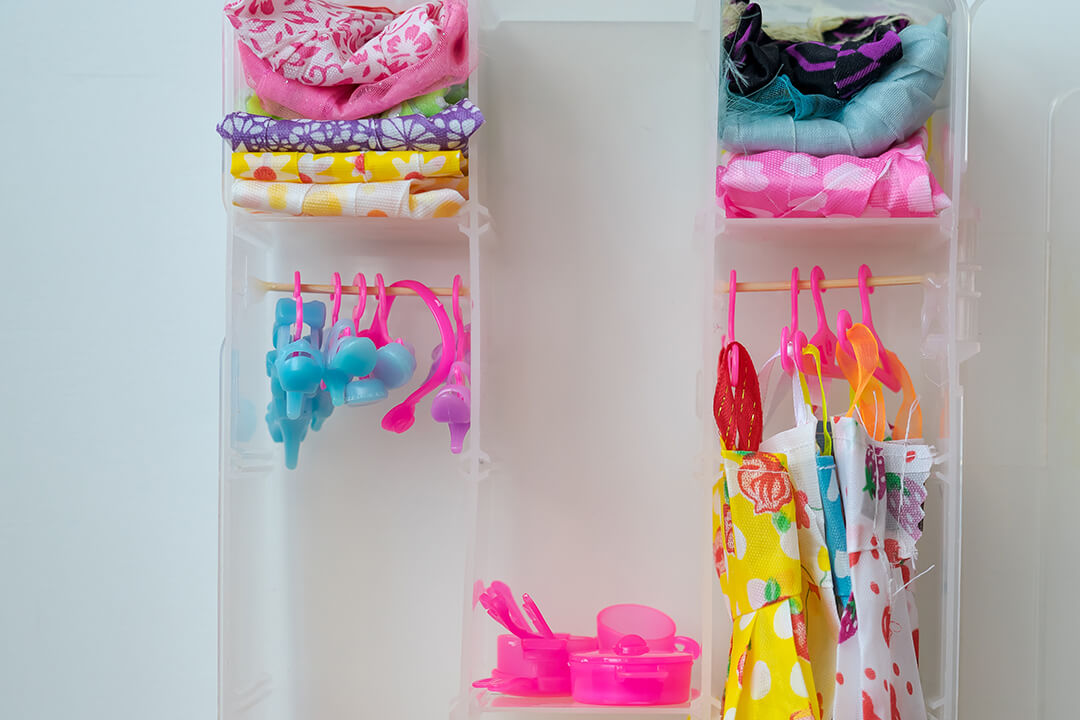
When it comes to my most memorable toy growing up, it has to be Barbie! The live-action movie that comes out this summer brings Barbie back into the limelight. Looking at the history of Barbie and the controversies that followed this doll through the years, it has come a long way. From having a very stereotyped image of a blond, white girl with an unrealistic body shape that only had “feminine careers”, Barbie and her friends have evolved into a family that embraces diversity in race, beauty, and gender roles. Initially, I was a bit reluctant to let my daughters play with it when they were young. But I thought if I explained to them the story of Barbie and her evolution through the years in the context of women’s rights and diversity, the children would look at Barbie in a different light and appreciate her in a more meaningful way than just being a dress-up doll.
Board Games Rule!!
An alternative to switching on the TV or playing a computer game, a family can always count on the good ole board games! They promote family bonding and encourage social skills in the “traditional” way (no hiding behind the screen and communicating by text messages). My favorite used to be Pictionary, and there is the children’s version that even the younger members can play too! There are so many new games in recent years that the choices are practically endless, with various themes such as adventure, sports-related, or trivia. I prefer the kind of board game that the players need to work together to solve a problem or to achieve a goal (instead of having the player compete against each other), so that the family can work together as a team.
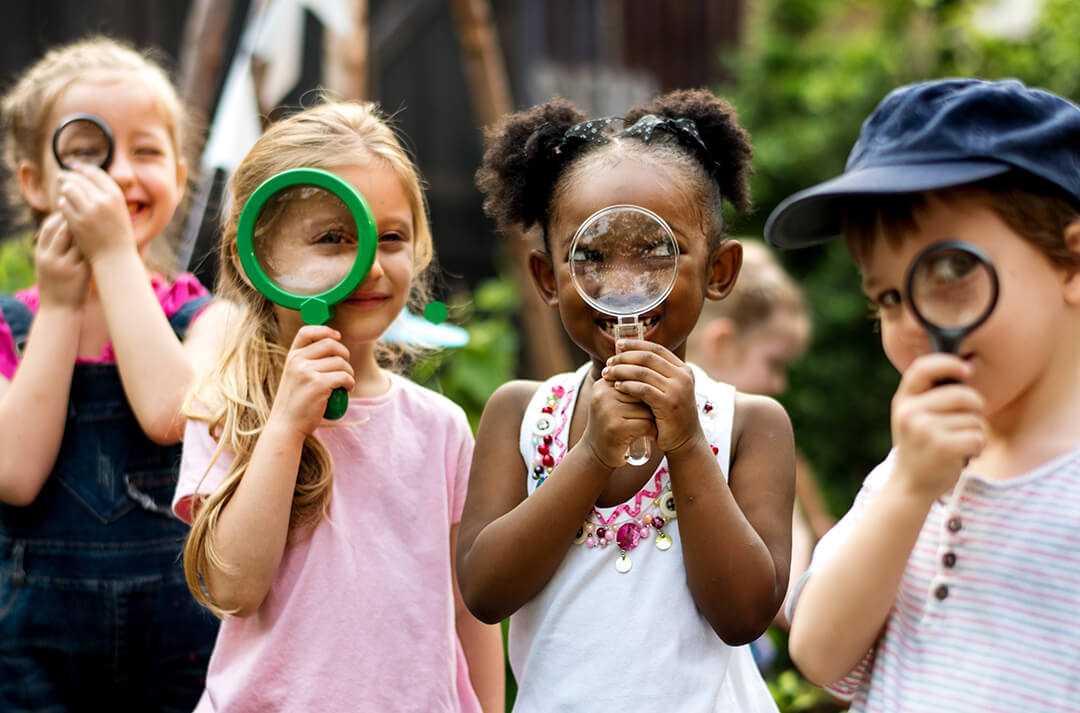
Little Detectives
Last but not least, there are crime-solving or mystery detective games that the whole family can play together! You can even create your own to play with younger kids and start helping them develop problem-solving skills early on! These games encourage the kids to approach the “case” with an analytical mind, think out-of-the-box, and learn to work with others to improve their social skills. There are so many really cool toys that we have grown up with in the 80s and 90s that our kids would still love to play with, that they would gladly lay down their electronic devices for! What else would you recommend?
Stay Sparky!
Happy New Year!
As the calendar turns to a new year, we have an opportunity to reflect on our roles as parents and set goals for the coming months. New Year’s resolutions can be a good start for our personal development and improvement, allowing us to focus on what is truly important for ourselves and our families. After some research and self-reflection, I found a few recurring goals/resolutions many parents are setting for themselves this year that can inspire us to create a more nurturing and harmonious environment at home. Let’s take a look at them together.
A Balancing Act
Strike the right balance between guidance and control, and let our kids progress at their own pace, one baby step at a time. This podcast gives great insight into what could be going on inside their little minds, why they respond, or not respond, to our advice in certain ways, and the importance of our trust in their judgment during various stages in their development. I think parenting is a challenging journey that must be approached with patience and understanding. With that, you will be able to respond calmly in difficult situations, fostering a more positive and supportive environment for our children to thrive with confidence.
Limit Screen Time
In today’s digital era, striking a balance between technology and other activities is critical. Although it is by now impossible to completely avoid screen time for our young children, we need to accept the fact that this generation of children is growing up with them as an integral part of their daily lives. However, there is research suggesting that when young children are leisure-reading from digital devices when they are still developing their reading skills, their comprehension level might not be as high as learning to read from printed materials. I guess the takeaway from this is that moderation is key when it comes to using electronic devices.
Photo: @vickieliliyan
Buy Fewer Toys
We are all doing our best to reduce waste and be more environmentally responsible in our daily lives, I think we need to make more effort and extend this practice to the consumption of toys. The internet and online shopping opened up so many more possibilities for us to buy toys and gadgets for the kids. So many of these are impulse purchases that we think would be “cute” or “fun” for our kids to have, but they can have a much bigger consequence for the environment when our children lose interest in them or outgrow them after a short time.
Prioritize Self-care
As parents, it’s natural to put our children’s needs ahead of our own. Neglecting self-care, on the other hand, can lead to burnout and as a result, impair our ability to be the best parents possible. Getting enough shut-eye and having regular workouts are just some of the more obvious things we can do to keep ourselves fit mentally and physically. By focusing on our health, we can be in a better condition to take care of our kids.
Photo: @mrpaulfeinstein
Jumpstart Your Social Life
I don’t mean playdates for your kids! But make time to meet up with your friends and connect with them socially again! Having kids doesn’t mean the death of friendships with your buddies in your pre-kids days. Spending quality time with your own friends as a couple with your partner, or a girls’ night out could do wonders to your morale and mental well-being. Everyone needs this social network of support to briefly take our minds off the daily stress of taking care of our families.
Adopting New Year’s resolutions as parents can be a wonderful strategy to improve your parenting journey. Remember that resolutions are personal, so pick the ones that speak to you and tailor them to your situation. Accept this new beginning and embark on a year of growth, love, and connection with your children.
Stay Sparky in 2024!
Your content
War and Peace
As parents, we want our children to grow up in a perfectly nurtured and positive environment, but at the same time, we must instill in them a broad understanding of the world. Thanksgiving is an excellent time to discuss the historical context of war, but it is also critical to address the ongoing realities of modern conflicts. We can help our children develop empathy, critical thinking skills, and a deeper appreciation for the peace we have by having conversations about the impact of war today. Although it is never easy to talk to children about war, it would be better for parents to help the little ones become aware of this subject with the correct guidance and attitude, rather than them coming across it from social media or overheard conversations among adults without the proper context. Let’s look at how to talk to our kids about modern war in relation to Thanksgiving while maintaining sensitivity and cultivating their understanding.
Use an age-appropriate approach
We should always consider the age and maturity levels of children before discussing modern war. Younger children may have difficulty grasping complex concepts, whereas older children can participate in more nuanced discussions. It is best to adapt our approach to their developmental stage, using books, language, and examples that are appropriate and relatable to them. We should be prepared to respond to their questions honestly and sensitively and don’t worry if you don’t seem to find the appropriate answer to their questions or concerns. What is important is that you are there to listen to what they have to say and to acknowledge their feelings.
Understanding the consequences of war
It would be more effective to start by asking your kids what they know about war and its consequences. This can help you to assess their current knowledge and correct any misconceptions they may have since there is so much false information and misleading reporting on social media nowadays. It is so important to discuss war because it is such a complex and difficult topic for the kids to grasp by themselves. The focus should be on the humanitarian aspect of modern war and its impact on people’s lives. Sharing stories about people and organizations that help and support those affected by conflict can give a more positive approach to the topic. Discuss the difficulties that refugees face, as well as the importance of compassion and empathy in times of crisis. Children can better understand the consequences of war and the importance of working toward peace by emphasizing the human element.
Working towards a better world
Thanksgiving is a great time to talk about how we can make the world a better place. We should encourage our children to consider small acts of kindness that they can carry out to make a difference in the lives of others affected by war. Discuss the significance of being grateful for the peace and stability we have and how we can express our gratitude by supporting organizations that help those affected by conflicts. We can help them develop empathy and a sense of responsibility for a more peaceful future by offering open conversations, emphasizing humanitarian aspects, encouraging critical thinking, and promoting acts of kindness and gratitude.
Happy Thanksgiving and Stay Sparky!
Do you know that…
Halloween, the bewitching holiday filled with costumes, candy, and all things spooky, has captivated people for centuries. While many of us are familiar with the typical modern Halloween traditions, there are many different interpretations on the origin of them that add an extra layer of intrigue to this haunted holiday. Join us as we look into a few of these aspects of Halloween that make a great conversation topic with our kids while we dress them up in their cute costumes!
Halloween, the OG
The origin of Halloween dates back to ancient Celtic folklore from Ireland and Scotland. The festival called Samhain, marks the day when the separation between the living and the dead is the thinnest. This is a time to honor their dead and to celebrate harvest. As Christianity spread across Europe in later years, it incorporated existing pagan festivals into its own calendar. October 31st became the eve of Catholic’s All Hallow’s Day, eventually evolving into Halloween.
What to wear?
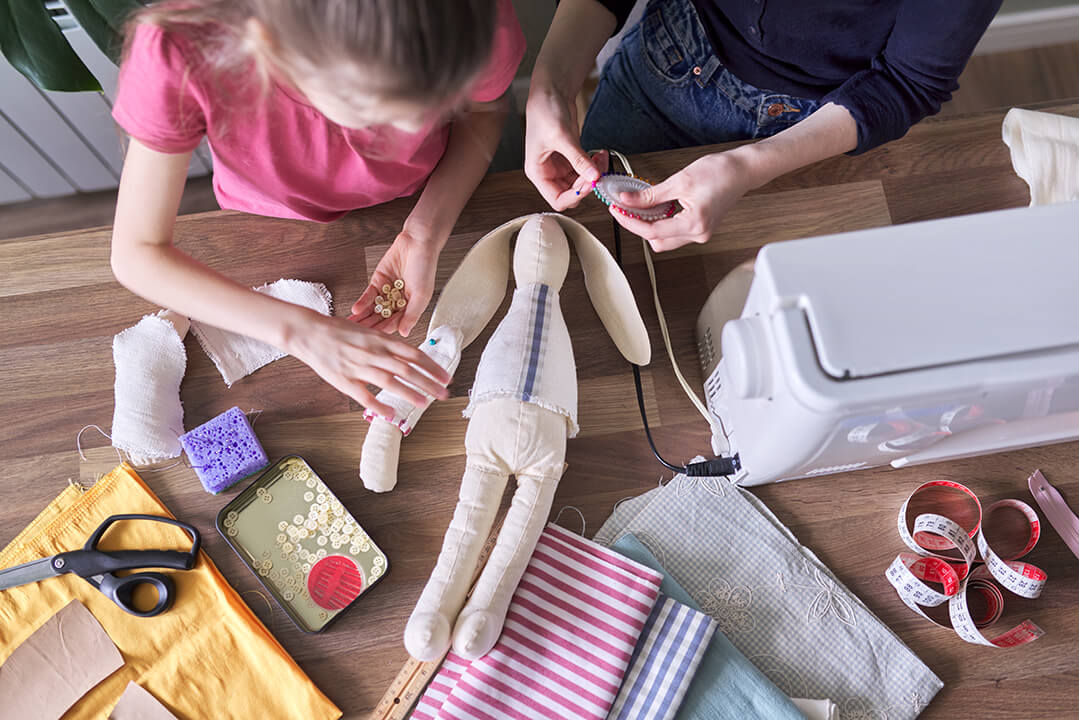
One of the most beloved traditions of Halloween is dressing up in costumes. There are a few theories on where this tradition came from and one of them has its roots in ancient beliefs. During Samhain, the Celtic festival that preceded Halloween, people would wear costumes and masks to ward off evil spirits. They believed that by disguising themselves, they could blend in with the supernatural entities that roamed the earth on that night. Nowadays, the sky’s the limit when it comes to Halloween costume ideas! I always have so much fun making costumes for my kids when they were babies, nothing beats a cute DYI outfit made lovingly by mommy! Here are some cute ideas for 2023’s Halloween.
Let Jack-o’-Lanterns lead the way
The tradition of carving pumpkins into jack-o’-lanterns has become synonymous with Halloween, but its origins can be traced back to an Irish folktale. According to the legend, a man named Jack, known for his trickery, was denied entry to both heaven and hell. As a result, he was doomed to wander the earth with only a lump of burning coal in a carved-out turnip to light his way. When Irish immigrants brought the tradition to America, pumpkins, readily available and easier to carve, replaced turnips.
Halloween and Sleepy Hollow
One might think of a place called Sleepy Hollow when Halloween is near, however, but it has nothing to do with the origin of the festival! This link was attributed to Washington Irving’s captivating story, “The Legend of Sleepy Hollow,” which features elements of the supernatural, a headless horseman, and an eerie setting. These themes align perfectly with the spooky atmosphere and traditions commonly associated with Halloween, thus making the tale an enduring part of the holiday’s lore. Snuggle up with your kids on the couch and watch this captivating shadow puppet short film on this legend to fully immerse yourselves in the spooky atmosphere!
Halloween Around the World
While Halloween is widely celebrated in North America, the celebration and commemoration of the deceased happen all over the world at different times of the year. In Mexico, the Day of the Dead (Día de los Muertos) honors deceased loved ones with vibrant parades and elaborate altars. In Ireland, the birthplace of Halloween, the holiday is celebrated with bonfires, traditional games, and storytelling. In recent years, Halloween has also gained popularity in countries such as Japan, Australia, and the United Kingdom, with their own unique twists on the holiday. Halloween offers a fascinating tapestry of traditions and beliefs. As we indulge in the spooky festivities, let us appreciate the depth and diversity that make this haunting holiday truly unforgettable.
Stay Sparky and Spooky!
Stay healthy and keep moving
Now that Summer is over and the family routine goes back to normal, we might find ourselves easing back to our sedentary lifestyle in front of the computer for hours at a time. The kids are also sitting down for class and homework more. One of the important elements of staying healthy during the flu season is to get enough exercise regularly. Incorporating fitness activities into your family routine not only can promote a healthy lifestyle but can also strengthen the bond among family members.
Everyone has a say
Involve everyone in the family when deciding which activities to pursue, taking into consideration each person’s interests, abilities, and preferences. My husband and I picked up boxing six years ago and it has become our weekly workout ever since. The kids would love to learn too, but due to their school schedule, they were not able to join our workout sessions on weeknights. But we made it a point to have some family boxing sessions whenever possible on weekends and when they have their long school holidays. They really enjoy them, after all, who wouldn’t want the chance to “spar” with their parents and try to get a punch through every now and then? 😉 I think this helps to establish a more “balanced” relationship between us as a family and encourages the children to be more self-confident.
Set challenges and goals
Incorporate friendly challenges or goals into your family fitness routine. It could be completing a certain number of steps, improving a specific skill, or achieving a collective fitness milestone. Creating a sense of achievement and progress encourages motivation and engagement for the entire family. If your family is new to regular physical activity, begin with simple and achievable activities. Start with short walks or bike rides and gradually increase the intensity and duration as fitness levels improve. In order to get our family to move more, we started to replace short-distance car commutes in the city by walking. We got some resistance from the kids in the beginning, but once we got used to the exercise, we managed to increase the distance a little bit at a time. We then moved on to hiking on the trails, bringing our dog along and making it a family day out. So, setting realistic goals ensures a positive experience for everyone involved definitely helps.
Active recreation
Let’s make our family recreation more active by choosing activities that involve movement. Instead of watching a movie at home, consider swimming, rollerblading, or trampolining as options to keep everyone engaged and physically active. These sports not only provide an excellent workout but also offer opportunities for bonding and building trust. Try to vary the activities to keep things exciting, they also target different muscle groups and promote overall fitness. Why not unleash your inner dancer and let the rhythm move your family? Turn up the music and have spontaneous dance parties in your living room. Alternatively, consider enrolling in dance classes that cater to all ages and skill levels. Whether it’s salsa, tap, hip-hop, or ballet, dancing not only improves cardiovascular health but also boosts coordination, flexibility, and self-expression. Plus, it’s a great way to let loose, laugh, and create lasting memories together.
Family fitness activities are a wonderful way to spend quality time together while prioritizing your health and well-being, but as parents, we should lead by example. We can demonstrate our commitment to fitness by actively participating in family activities and maintaining our own exercise routine. Hopefully, our enthusiasm and dedication will inspire and motivate the children to also prioritize their health and well-being. So, get creative, have fun, and embark on this fitness journey together, creating fond memories and fostering a healthy and active lifestyle for the whole family.